
Product
AEROTECT DRID
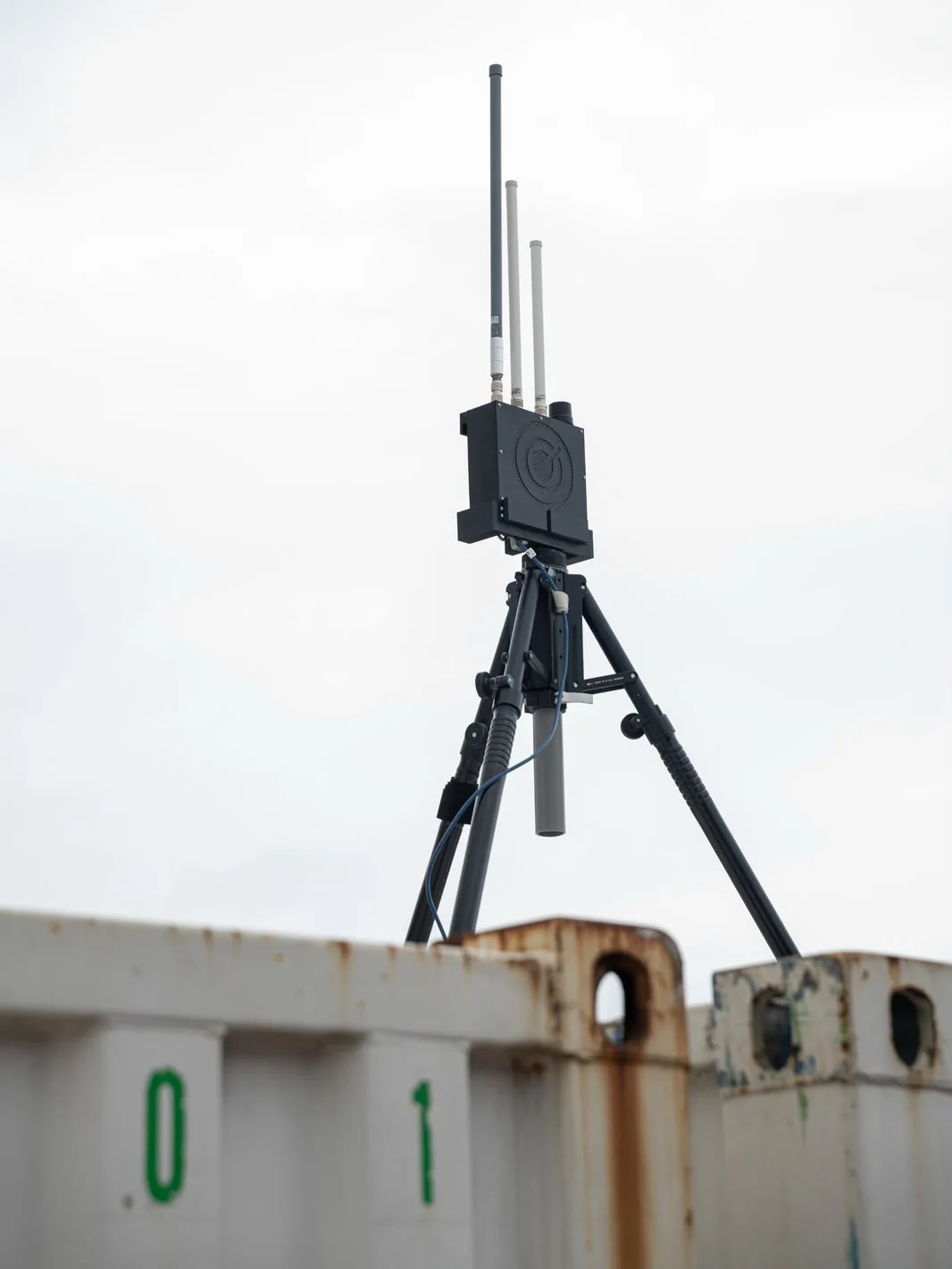
Drone Remote ID Detector. One receiver for every Remote ID transport, built for permanent outdoor installation and rapid temporary deployment.
What the DRID receives
Four transports, one receiver
The European Remote ID standard requires a drone to broadcast its identity and position, but lets the manufacturer choose the radio protocol. A receiver that only listens to one or two of them misses drones. The DRID listens on all four at the same time.
All standards and reception methodsBluetooth 4 Legacy Advertising
The oldest and most widespread transport. Short advertising packets containing the serial number, position and altitude. Many first-generation consumer drones with Remote ID use this channel exclusively.
Bluetooth 5 Long Range
Uses the Coded PHY (S8) of Bluetooth 5 for greater range and more robust reception. Newer drones broadcast this alongside or instead of Bluetooth 4.
WiFi Beacon
Remote ID data in beacon frames on 2.4 and 5 GHz, the same mechanism a router uses to announce its network name. Used among others by drones that keep a WiFi link to the controller.
WiFi NaN
Neighbor Awareness Networking, also known as WiFi Aware. Broadcasts the Remote ID message in service discovery frames without a connection. In Europe, receivers that follow EN 4709-002 must support it.
Specifications
Technical data
Enclosure and mounting
- Protection rating
- IP67
- Installation
- Permanent outdoors, or temporary on a mast, roof or container
- Antennas
- Omnidirectional, 360-degree coverage
Power and connectivity
- Power
- Power over Ethernet (PoE)
- Data
- Ethernet over the same PoE cable
- Optional
- 4G module for locations without a wired network
Detection
- Remote ID
- Bluetooth 4 Legacy, Bluetooth 5 Long Range, WiFi Beacon, WiFi NaN
- Standards
- ASTM F3411, ASD-STAN EN 4709-002
- Data per drone
- Serial number, position, altitude, speed, heading, pilot position, timestamp
- Optional
- ADS-B receiver for manned and unmanned aviation
Range
- Urban areas
- 7.5 km, built-up area, omni antennas
- Rural areas
- 15 km, open terrain with line of sight, omni antennas
- Measurement conditions
- Measured from an elevated position, with line of sight and an omnidirectional antenna. Directional antennas have reached more than double, within a limited beam width. Buildings, a low mounting position or an aircraft that transmits weakly bring it down.
Network and platform
- Multiple units
- Linked into a single coverage area in the AEROTECT platform
- Platform
- Live map, zones, alerts, history, API
- Integration
- SAPIENT-compliant API, plus REST and webhooks
- Users
- Unlimited users per organisation, with roles
Optional modules
Expandable where needed
- Optional module
4G module
For temporary setups and remote locations without a wired network. The DRID then sends its observations to the platform over the mobile network.
- Optional module
ADS-B module
Receives everything carrying an ADS-B transponder: aircraft, helicopters, air ambulances and the larger unmanned aircraft that carry one. Drones, manned aviation and unmanned systems appear on the same map. Relevant near airports and at events with a temporary restricted area.
Coverage
One unit for a site, several for a route
For a festival site, one DRID in a central, elevated position is often enough. For a long route, a port area or a site with many buildings you place several units. The platform merges their observations into one picture and removes duplicate alerts.
- 1 to 2 units
- Festival site
- 2 to 4 units
- City centre
- 6 to 10 units
- 40 km route
Indicative figures under the stated measurement conditions. Advice follows an intake based on your site plan and surroundings. See the measurement conditions
Honest about the limits
What the DRID does not do
No detection without Remote ID
A home-built drone, or one with Remote ID switched off, broadcasts nothing and will not be seen. In practice, drones at events are almost always regular consumer drones that do broadcast.
No jamming or takeover
The DRID only receives. In the Netherlands, jamming or taking over drones is reserved for authorised government agencies. We provide the picture those agencies act on.
No guaranteed range
The stated distances were achieved under favourable conditions. Rain, buildings and a low mounting position shorten the range. That is why we always advise on placement.
Want to know how many units your site needs?
Send us a site plan or an address. Within two working days you will receive placement advice and a proposal for rental or purchase.